Forensic Nurse Examiner
If you are a victim of domestic violence or sexual assault and need assistance, documentation of injuries is provided by calling our HELPline 256-716-1000 and requesting to speak with a forensic nurse.
About the Center for Compassionate Forensic Education
at
Crisis Services of North Alabama
For more than four decades, Crisis Services of North Alabama has been a leader in forensic nursing. What began in 1982 as a five-nurse, hospital-based sexual assault program has grown into a comprehensive forensic program serving numerous counties. Today, our team provides expert, trauma-informed care for patients of all ages experiencing sexual assault, domestic violence, strangulation, child and elder abuse, felony assault, and suspect examinations.
Our commitment to education has expanded alongside our clinical program. The addition of our Forensic Teaching Associate (FTA) Program, IAFN-Approved Clinical Skills Laboratory, and Forensic Nurse Virtual Preceptorship (FNVP) has allowed us to train and mentor forensic professionals throughout the United States and internationally.
In 2026, we united all of our educational initiatives under the Center for Compassionate Forensic Education (CCFE). Our mission is to deliver high-quality, trauma-informed forensic education that empowers healthcare professionals, advocates, law enforcement, and multidisciplinary teams to provide compassionate, evidence-based care and advance forensic practice worldwide.
Advancing Excellence in Forensic Education
We are dedicated to fostering a compassionate approach to forensic education, empowering professionals to make a meaningful impact in their communities. Our commitment lies in blending empathy with expertise to address the unique challenges of forensic healthcare.
What is a Forensic Nurse Examiner?
A Forensic Nurse Examiner (FNE) is a registered nurse with specialized education and clinical training in caring for patients affected by violence, abuse, neglect, and other traumatic events. FNEs combine compassionate, trauma-informed healthcare with the careful recognition, assessment, documentation, and collection of forensic evidence that may assist in legal proceedings.
Forensic Nurse Examiners care for patients of all ages and work collaboratively with healthcare providers, advocacy organizations, law enforcement, child protection services, prosecutors, and other multidisciplinary professionals to ensure patients receive comprehensive medical care while preserving evidence with dignity and respect.
What Do Forensic Nurse Examiners Do?
Forensic Nurse Examiners provide expert, patient-centered care in a variety of situations, including:
Sexual assault examinations
Domestic violence and strangulation assessments
Child abuse and neglect evaluations
Elder abuse assessments
Human trafficking cases
Suspect examinations
Injury documentation and forensic photography
Evidence collection and preservation
Court testimony as expert or fact witnesses
Safety planning, advocacy referrals, and follow-up care
Every examination is performed using evidence-based practice while ensuring the patient's physical, emotional, and psychological needs remain the priority.
Already a Trained Forensic Nurse?
Whether you are newly trained or an experienced examiner, ongoing education is essential to maintain competency and stay current with emerging research, evolving best practices, and advances in forensic healthcare.
The Center for Compassionate Forensic Education (CCFE) offers continuing education opportunities including:
Advanced forensic specialty courses
Strangulation assessment training
Clinical Skills Laboratories (CSLs)
Pediatric and Adult/Adolescent specialty education
Documentation workshops
Courtroom testimony preparation
Photography and injury interpretation
Case review and multidisciplinary learning
Monthly FNExchange continuing education sessions
Preceptorship and mentorship programs
Clinical Coordinator and Program Manager education
International educational opportunities
Forensic nursing is a rewarding specialty for nurses who are passionate about caring for vulnerable patients while making a meaningful difference in both healthcare and the justice system.
To begin your journey, you should have:
An active Registered Nurse (RN) license
A minimum of two years of nursing experience (recommended by most programs)
A passion for trauma-informed, compassionate patient care
Strong critical thinking, assessment, and communication skills
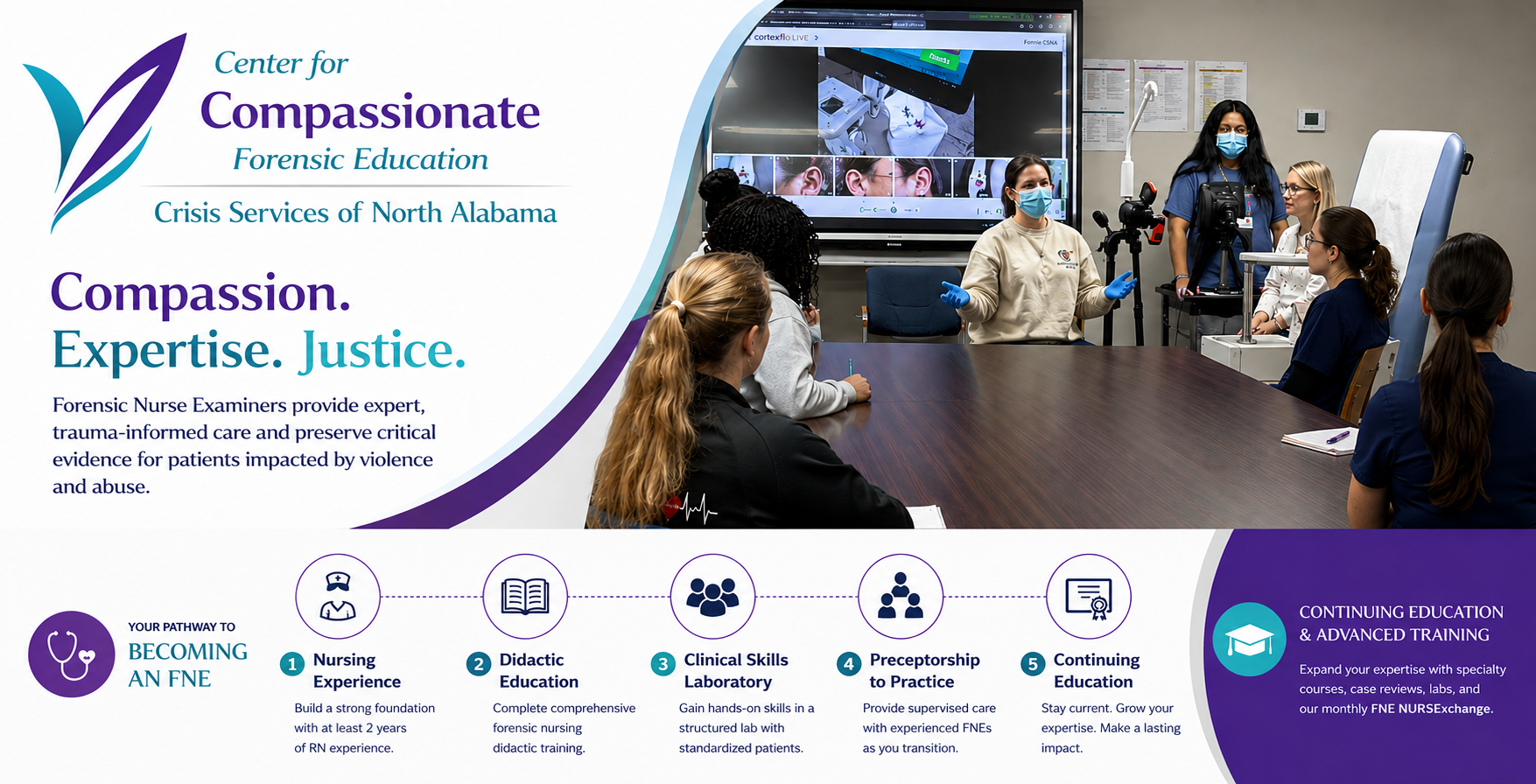
Your Pathway to Becoming a Forensic Nurse Examiner
Becoming competent in forensic nursing involves more than attending a course. Clinical expertise develops through structured education and supervised practice.
Step 1 – Registered Nurse Experience
Build a solid foundation of clinical nursing skills through at least two years of RN practice.Step 2 – Complete Didactic Education
Attend a comprehensive forensic nursing education program covering medical-forensic care, evidence collection, documentation, trauma-informed practice, anatomy, injury identification, legal considerations, and courtroom testimony.Step 3 – Clinical Skills Laboratory (CSL)
Participate in hands-on training using standardized patients and forensic teaching associates to develop competency in examination techniques, evidence collection, injury recognition, photography, documentation, and communication.Step 4 – Preceptorship to Practice
Work alongside experienced Forensic Nurse Examiners while completing supervised clinical examinations. This transition-to-practice phase allows new FNEs to apply classroom knowledge in real patient care with ongoing mentorship and feedback.Step 5 – Continuing Education and Professional Development
Learning does not end after initial training. Successful Forensic Nurse Examiners participate in continuing education, case review, specialty courses, simulation training, peer mentoring, and quality improvement activities to maintain clinical excellence throughout their careers.
Forensic Teaching Associates (FTA)
Our specially-trained FTA team assists with training and continuing education by teaching the forensic exam from the point of view of the patient. From genital exams and trauma-informed care to full scenario situations, an FTA session is a safe learning environment to learn and practice skills before engaging with a patient.
Our FTAs are available for Clinical Skills Labs (either at our site or yours), one-on-one sessions, virtual learning sessions, research projects and much more.
We can also train FTAs specifically for your program with a 40-hour hybrid learning curriculum.
Interested in joining our Huntsville, Alabama-based team? Training is free.